
Case study
The anatomy of a variation
It starts with four words on a Tuesday morning — 'while we're at it' — and ends, on the projects that go wrong, as £30,000 of work nobody agreed a price for.
September 2026 · 8 min read · The Construction Clinic
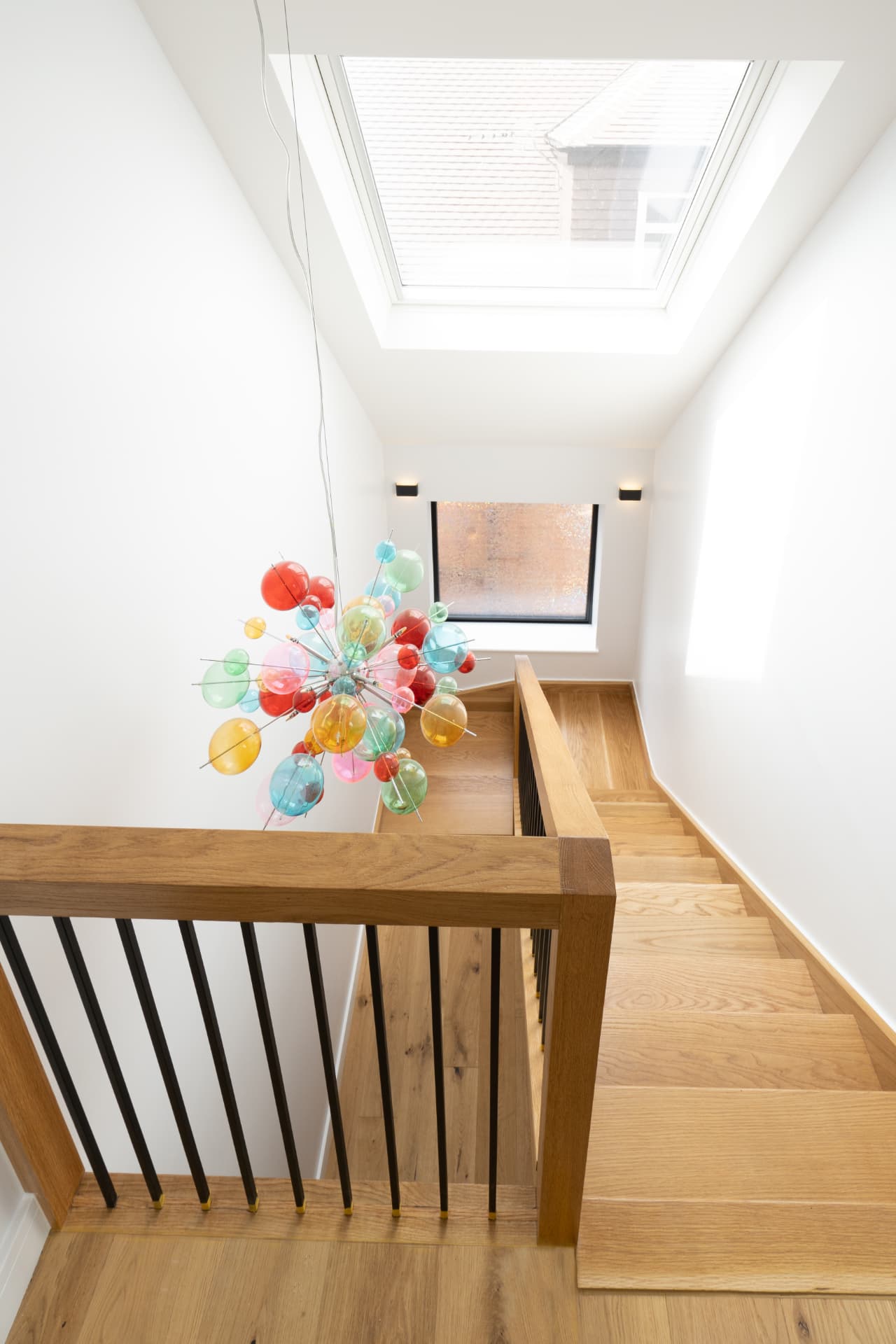
A loft conversion in west London. Contract sum £74,000, programme fourteen weeks. It finished at £101,400 in week twenty-two. There was no dispute about workmanship, no insolvency and no cowboy. The overspend was made of nineteen conversations.
Move the stud a little to square the room. Upgrade the rooflight while the roof is open. Take the plaster back to brick since it is coming off anyway. Each one sounded like a detail. Only two of the nineteen were ever priced before they were built.
This is how most domestic overspends actually happen. Not through a single catastrophe, but through a chain of reasonable decisions taken standing up, in dust, with no paper.
“A variation agreed verbally is not a change to your project. It is an invoice you have not seen yet.”
Three kinds of change, and only one is your fault
Client changes are the ones you ask for. Design changes are the ones the drawings forced — a detail that could not be built as drawn. Discovered conditions are the ones the building revealed: rotten joists, a drain in the wrong place, foundations shallower than assumed.
The distinction matters because it determines who pays. Discovered conditions are usually a genuine additional cost. Design changes may sit with the designer. Client changes are yours, and they are the only category you fully control.
On the loft above, £9,100 was discovered conditions, £4,300 was design, and £14,000 was client changes made in conversation. The homeowner believed the builder had run over budget. The builder believed he had been endlessly helpful. Both were describing the same nineteen conversations.
The one-page change note
- What is changing, in one sentence
- Why — client request, design issue or discovered condition
- The cost, or a stated basis if the cost is not yet known
- The effect on the programme, in days
- Both names and the date, before the work is done
Why 'we'll sort it at the end' never sorts it at the end
Deferring the price of a change is not neutral. It moves the negotiation to the worst possible moment: the end, when the work is built, the money is largely spent and you have no leverage other than the final payment you were going to make anyway.
It also destroys the evidence. Three months on, neither party remembers whether the extra rooflight was agreed as included or extra, and both remember it in the way that suits them. That is not dishonesty; it is memory doing what memory does.
The change note takes four minutes. It is the highest-return paperwork available on a building site.
Keep a running total where you can see it
The second discipline is arithmetic. Keep one line per change and a running total against your contingency, visible at every site meeting. When the total reaches half the contingency, that is not a crisis; it is the signal to stop approving anything discretionary until the structure is complete and the remaining risk is known.
Homeowners who keep this list rarely overspend badly. Not because the list prevents change, but because seeing the number changes what they say yes to.
The last word
Start the list today, even mid-project, and reconstruct it as accurately as you can. Send it to your builder and ask them to confirm or correct each line.
A disagreement found in week nine is a conversation. The same disagreement found at handover is a dispute.